
Small cities often face aging infrastructure, overlapping repair needs, limited staff capacity, and the costs of waiting too long. Often, the best first step is to focus on repeat problem areas, identify the highest-risk issues, and take the next practical step.
At Bollig Engineering, we work with small cities facing these kinds of challenges every day. In many communities, the hardest part is not being aware that something needs attention. It is important to determine what to look at first, understand what can wait, and decide what next step makes sense.
The good news is that progress does not have to start with a huge project. In many cases, the most helpful first step is to take a focused look at system issues that are causing recurring operational costs, service issues, or uncertainty.
Here are five common infrastructure challenges we see small cities facing, along with practical ways to respond.
1. Aging infrastructure creates repeat problems
Many small cities are working with streets, utilities, drainage systems, and public facilities that have been in service for decades. Over time, repairs become more frequent and less predictable. Staff may start noticing the same break locations and trouble spots after weather events, or existing equipment that needs consistent attention to continue operating. Sometimes the concern is not just age. It is what happens when there is very little backup if a well, lift station, treatment component, or key line has trouble. When one part of the system carries too much of the load, even a small issue can become a much bigger service problem. For example, a city may keep patching the same stretch of street, only to find that poor drainage or aging infrastructure beneath the surface is part of why the problem keeps coming back.
What small cities can do about aging infrastructure:
- Make a simple list of the infrastructure that causes the most repeat work
- Note the age, known condition, and repair history
- Pay attention to assets that have little or no backup system in place
- Focus first on issues that affect safety, service, and recurring costs
Bollig often helps small cities take scattered repair history and turn it into a clearer picture of what is really happening.
2. Too many needs compete all at once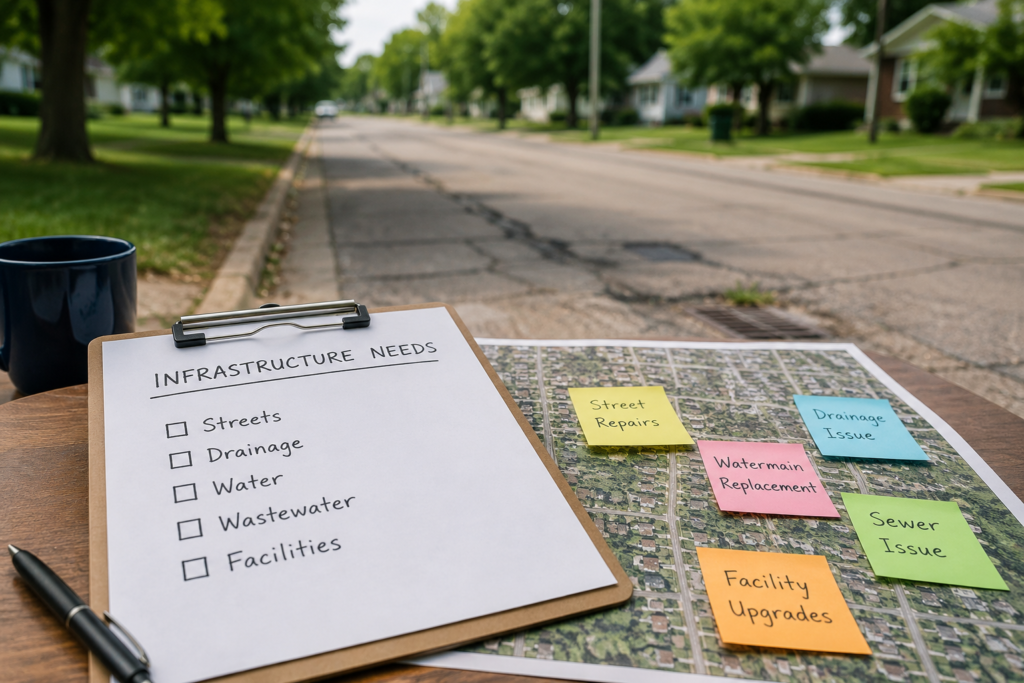
In small cities, it can feel like everything is urgent. Street repairs, drainage complaints, water and wastewater issues, and facilities all compete for the same time and budget resources. A street project may seem simple until someone asks about the watermain, sewer, or drainage issue in the same area. Looking at a single issue in isolation can create more disruption later. It also helps to remember that the best answer is not always the biggest project.
How to prioritize infrastructure needs:
- Compile a list of all known needs associated with existing infrastructure
- Ask what happens if the issue waits one more year
- Consider safety, service impact, repeat complaints, and repair frequency
- Look for locations where street, utility, and drainage work should be reviewed together
If a city is already planning street work in an area with recurring drainage or utility issues, it usually makes sense to address those issues together before paving begins. This kind of coordination is one of the simplest and most effective ways to avoid duplicating work. Bollig prioritizes helping small cities by stepping back, examining interconnected issues, assessing potential solutions, and identifying practical next steps.
3. Hidden problems often show up as complaints first
Some of the most expensive infrastructure issues are not obvious at first. Water may be moving where it should not be going. A drainage problem may really be a grading issue. Pavement failure may be tied to excessive moisture below the surface. Resident complaints are often early warning signs. Repeated calls about standing water, discolored water, filter clogging, low pressure, or sewer backups usually mean something requires a closer look. The quick fix may relieve a symptom, but it does not always solve the actual problem.
Ways to identify infrastructure problems that may not be visible:
- Pay attention to recurring complaints and trouble spots
- Track when problems occur, especially after rain, thaw, or heavy use
- Start with a targeted review instead of assuming the whole system is failing
- Focus on the source of the problem, not just the symptoms
When the cause is unclear, an outside review can help confirm whether the issue is isolated or part of something bigger.
4. Small teams are stretched too thin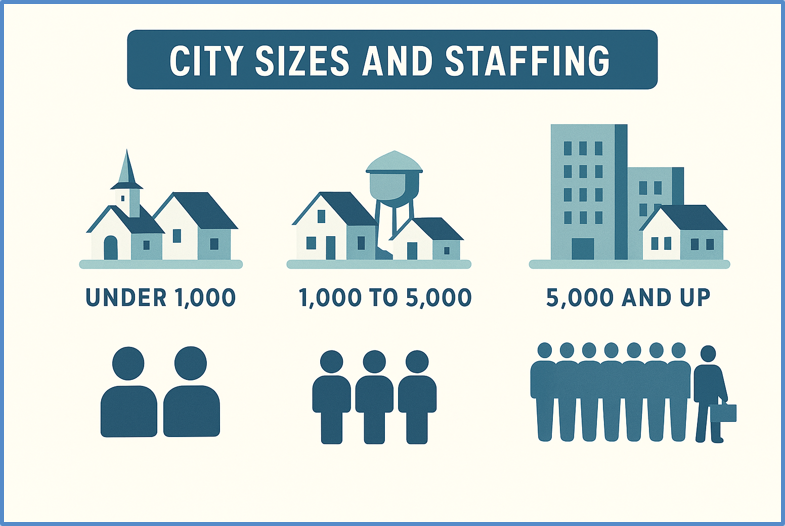
In many communities, the same staff are responsible for streets, water, wastewater, drainage, snow removal, and more. This leaves very little time for documentation, preventive maintenance, or stepping back to look at long-term needs. It also means a lot of system knowledge can live with one or two people. If records are outdated, maps are incomplete, or staff changes happen, even routine work can get harder to complete. The good news is that a city does not need perfect records to make progress. Even simple notes about repeat repair locations, wet-weather trouble spots, equipment issues, and resident complaints can make future decisions easier.
How to make the most of a city’s small team and limited resources:
- Keep maps, notes, and contact information organized, better yet, digitized
- Write down key procedures before they live only in someone’s memory
- Document repeat problem areas and common repair locations
- Focus limited time on tasks that reduce repeat emergencies
- Bring in outside support when staff workload is already stretched
In many cases, Bollig Engineering helps by evaluating problem areas, assessing options, organizing next steps, and suggesting tools such as SilverSmith Data. and supporting city staff when time is limited.
5. Waiting too long limits your options
 No city can avoid every emergency, but when action only happens after something fails, options are more limited. Costs increase, schedules get tighter, and staff have less time to think about the best solution. There is also a compliance side to this. Delays can lead to permit issues, inspection findings, or rushed decisions when new requirements catch up with an older system. This often shows up in situations where aging wastewater, drinking water, or treatment infrastructure is already under pressure. For example, resurfacing a street without reviewing the drainage or utility conditions below can lead to more disruption sooner than expected. The same thing can happen when a drainage issue is patched repeatedly, or when sewer problems are ignored until they become more serious.
Ways to avoid delays and continue progress:
- Gather enough information to understand the likely next step
- Keep leadership informed with a simple explanation of the problem, the risk, and the options
- Stay aware of permit or compliance issues that could narrow your choices later
- Focus on steady progress instead of waiting for the perfect time
The goal is not to create a complicated plan. It is to make a better decision before a problem becomes more disruptive and more expensive.
Practical Steps for Small Cities
Bollig Engineering helps small cities evaluate infrastructure issues, clarify priorities, and identify practical next steps. We work with small cities to:
- Review recurring problem areas and infrastructure concerns
- Look at related issues together when streets, drainage, water, or wastewater overlap
- Identify practical next steps based on risk, service impact, and available information
- Support funding, planning, and decision-making with small-city realities in mind
If your city is sorting through infrastructure concerns and deciding what comes next, start the conversation with our team. Call us at 320-235-2555 or contact us online.
 English
  Spanish