
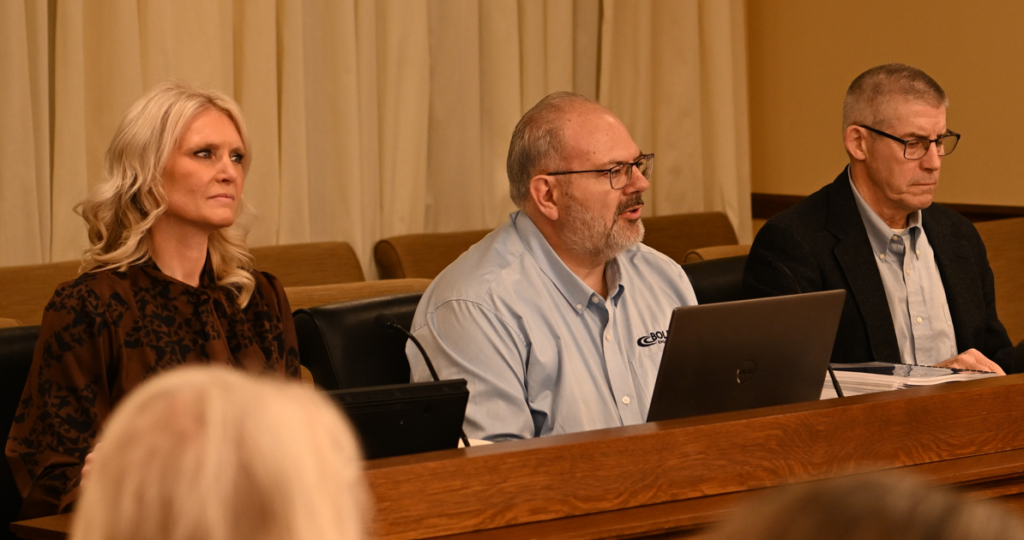
In March 2026, Bollig Engineering presented to the Minnesota House Capital Investment Committee during their bonding investment hearing. We want to help Minnesota lawmakers understand the infrastructure challenges small cities face. Our goal was to help legislators understand why infrastructure costs are rising in small Minnesota cities, and why these communities need funding programs that match their unique circumstances and limited resources. We shared data on small cities, examples of rising costs they face in drinking water and wastewater infrastructure projects, and solutions to guide decisions on future funding bills. Brian Bollig, President and Founder of Bollig Engineering, appeared with Funding Program Manager, Laura Ostlie and Senior Funding Advisor, Bill Dunn.
Minnesota’s Rural Cities: Big Needs, Small Resources
Minnesota is home to 856 cities.
-
83% of Minnesota cities have populations under 5,000 residents
-
Nearly 71% of the cities with populations below 5,000 have under 1,000 residents
-
1.6 million Minnesotans live in small communities
Small cities have no engineering or strategic planning positions on staff. Larger cities may have fully staffed engineering departments, but smaller communities often rely on only two to five staff members to oversee everything from utility systems to roads. This makes outside expertise essential when planning and managing infrastructure projects.
Who We Are and Why We Testified
Founded in 2007 in Willmar, Minnesota, Bollig Engineering serves cities and airports in Minnesota, North Dakota, and South Dakota. Our services include:
-
Engineering and architectural design
-
Construction management
-
Funding assistance
-
Strategic planning
Bollig Engineering is designed for small cities. Many of our team members grew up in rural communities, so we understand the realities these cities face. Our approach is designed to make expert-level planning accessible, affordable, and aligned with each city’s resources.
Funding Assistance: A Critical Part of the Process
Our strategic planning process and relationships with funding partners are making a difference for small Minnesota cities! Bollig Engineering has helped secure nearly $290 million in funding for small cities:
-
Federal: $176 million or 61% of total funding
-
State: $96 million or 33% of total funding
-
Local cash: $18 million or 6% of total funding
Projects often require three to seven different funding sources to make them affordable. Federal programs like USDA Rural Development offer low-interest and longer loan terms, but come with extensive reporting requirements. The Bollig funding team works diligently to accurately convey how residents in small cities are affected by decisions to fund or not fund a project.
Rising Infrastructure Costs: What the Committee Needs to Know
Infrastructure can fail quietly, without visible signs. Underground pipes or treatment systems may be decades past their useful life. When they fail, repairs are expensive and disruptive. We outlined some of the main cost drivers of drinking water and wastewater infrastructure projects.
-
Inflation & CPI: Inflation spiked during COVID due to supply chain issues and has since eased. Consumer Price Index shows that the past 10 years prices have increased by 33%
-
Construction Costs: Construction costs include materials, labor, and suppliers. The market decides the price, not the engineer or the contractor.
-
Watermain Costs: Watermain construction costs increased by 42.9%, and materials costs by 36.7% over the last decade.
-
Concrete Pricing: Concrete pricing imbalance is driven by rising costs of diesel fuel, logistics, labor, and aggregate.
-
Water Treatment Plant Costs: The water treatment plant costs, including buildings, process equipment, and electrical controls, rose from 43% pre-COVID to 72% today. Electrical components alone have increased 300% since 2020.
-
Labor Costs: Labor costs are growing faster than the Consumer Price Index, adding to contractor bids.
Our Commitment: Neighbors Serving Neighbors
We take pride in finding the right solutions for small cities. Our role is to protect public health and safety, preserve infrastructure investments, and maintain public trust through reliable water and wastewater systems. We appreciate the opportunity to provide our testimony at the House Capital Investment Committee. It is part of our mission to speak up for rural communities and their residents so their needs are understood and funded. We shared with the Minnesota House Capital Investment Committee some areas that are working well and others that can be improved.
What is working well:
-
Legislative visits to small cities
-
Public Facilities Authority (PFA) program
- Consistency of Public Funding
-
Leveraging state and federal funding together
What can be improved:
- Fluctuations in funding cause uncertainty and increase costs
- Greater Minnesota experiences consistently higher costs
- Low tax base makes it difficult to keep projects affordable
- Interest and financing costs are often unreimbursed
The video of the March 10, 2026 House Capital Investment Committee hearing can be viewed below.
Does your Small City Need Help?
If your city is facing rising infrastructure costs, struggling to navigate funding requirements, or needs help planning a water, wastewater, or street project, Bollig Engineering is here to help. Give us a call at 320-235-2555 or contact us online to learn more.
 English
  Spanish